
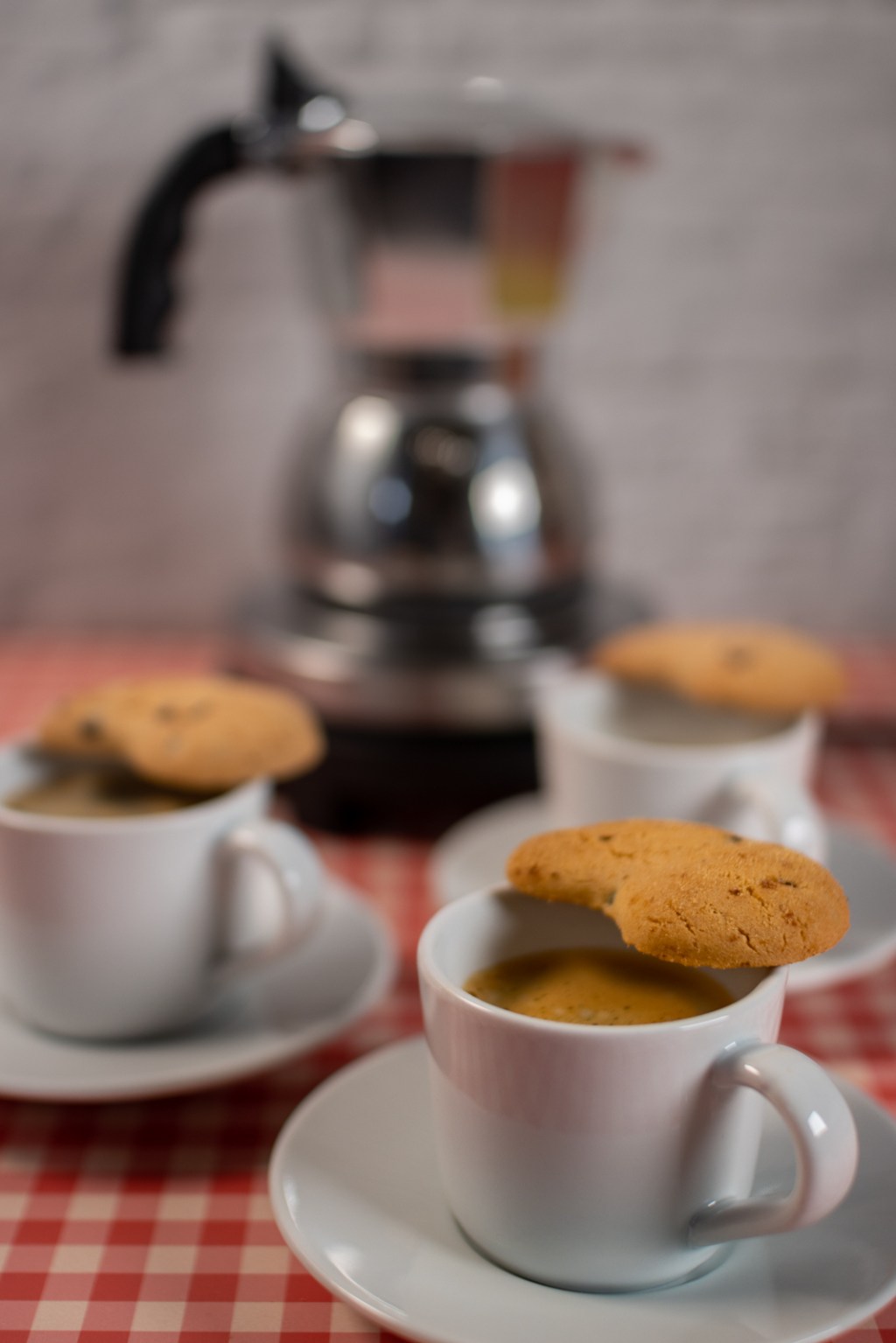
I absolutely hated coffee until I was 40. It was always sour and bitter and more often than not, came with a nasty aftertaste of wet dirt. Even the coffee grounds smelled weird and not at all like what wafted from the cafés and fancy coffee shops where I so often bought a pastry but never ever ordered coffee. I choked down the occasional half cup of black brew at family gatherings, heaped with cream and sugar to taste as little of the actual coffee as possible. Just to keep Grandma happy. I completely dismissed coffee when I was with friends, because they were more tolerant and gave me other options.
Weirdly enough, I always loved coffee flavored desserts. From ice cream over cakes to chocolate, and of course tiramisu. Coffee flavored everything was always my favorite. It took an outing with my teenage niece and a messed up order at a coffee shop to finally find out what the problem was all along:
My family and some of my friends drink (and apparently LIKE) crappy coffee!
My whole life changed after that incident in may 2017. I started to order coffee whenever I bought a pastry, experimented with different brands and roasts, found my favorite flavor profile, and my first tiny coffee (pad) machine moved in. From there I discovered cold brew, turkish mokka, italian espresso, there was so much to catch up on! And I found out that I actually prefer my coffee black.
Now, I’m an addict. An addict with a refined taste who throws out a ton of money for columbian and guatemalan single origin beans, roasted italian style in a small roastery nearby, and owning a high end coffee maker that is every bit the diva it looks like. “I’m low on water! My used grounds container is getting full! I need a descaling!” That thing is so annoying first thing in the morning!
My recent trip to Italy abruptly ended that daily annoyance. We’d rented a villa and were initially so happy that it came with two drip coffee makers for the tourists (us). Fortunately, one of them broke on day 2. With 12 caffeine junkies in the house, we had to figure out the army of moka pots hidden in a cupboard to get our fix. The result was so good, it immediately became something of a ritual. The other drip coffee maker got shoved into a dark corner and we celebrated our double morning moka and our 5 o’clock moka plus a cookie every day.
I’ve been back home for nearly 3 weeks now and I haven’t stopped celebrating yet. I doubt I will. That diva coffee maker will eventually move to a new home where it’s used and appreciated, while the tiny army of moka pots in my cupboard will grow and I enjoy my 10 minute morning and afternoon ritual of brewing the best coffee there is. My supermarket even sells those same Italian cookies we had on vacation.
The only drawback of the moka pots is that you have to always fill them to capacity to make them work. Which means, you have to either buy a different pot for every occasion and they’ll multiply, or you just go with a big one and dump the overproduction. Dumping coffee is no option for me, so I have two moka pots already, one for 3 (espresso) cups and one for 4. One of them is induction compatible while the other has a special vent that produces a wonderful crema and came with its own tiny hotplate.
I definitely need at least one more, a 6 cup one for guests (and making tiramisu). And after that, I’ll see…
But on to the coffee making now:
Every moka pot has five parts:
- a bottom part that holds water and has a built-in overpressure plug
- a funnel-like sieve that holds the coffee grounds and seamlessly slids into the bottom part
- a rubber gasket
- a 2nd sieve that’s fixed to the top part with the rubber gasket
- a top part that collects the brewed coffee


Making moka is easy and the only things you need is finely ground coffee, some water and a few minutes of time.
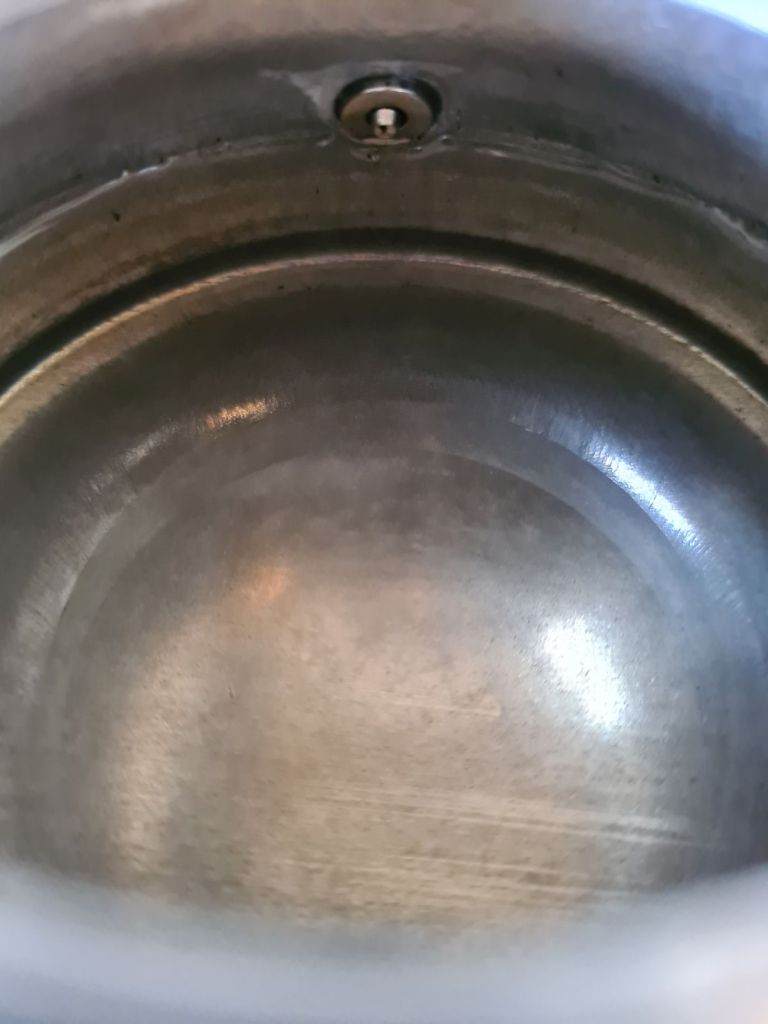
Step 1:
Fill the bottom part of the moka pot with water until it just reaches the bottom of the overpressure plug.
I use hot tap water because it speeds up the whole process a little bit.
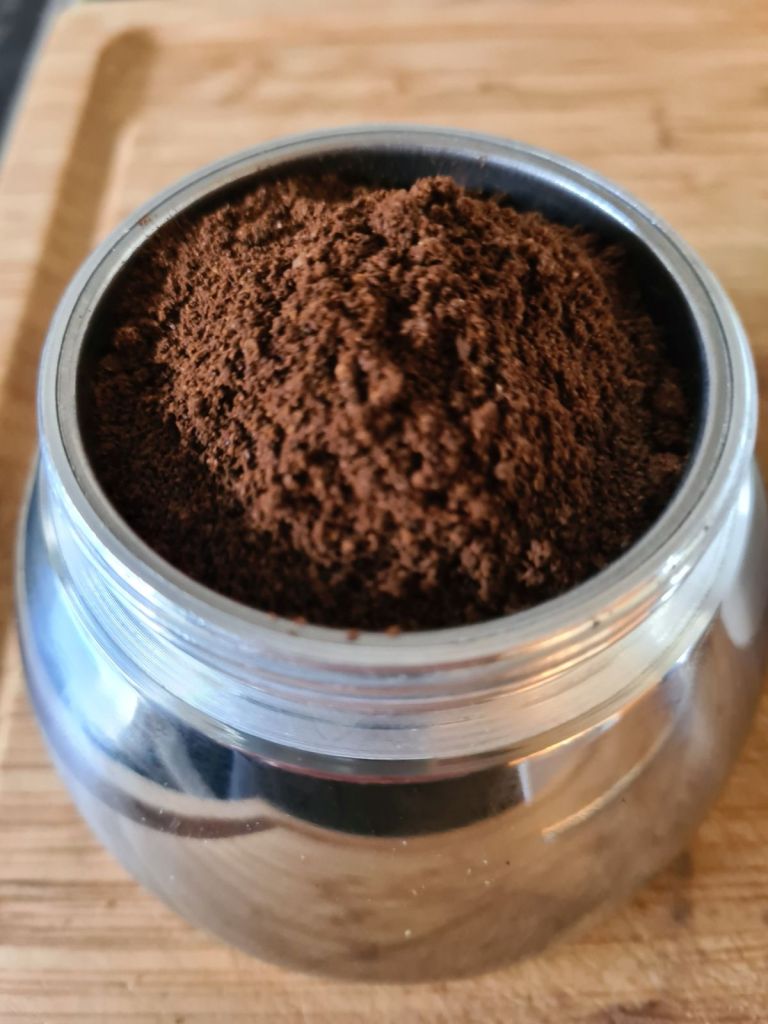
Step 2:
Place the funnel in the bottom part and loosely fill it with finely ground coffee. Don’t press it down.
Make sure the sides and top of the threads are free of crumbs.
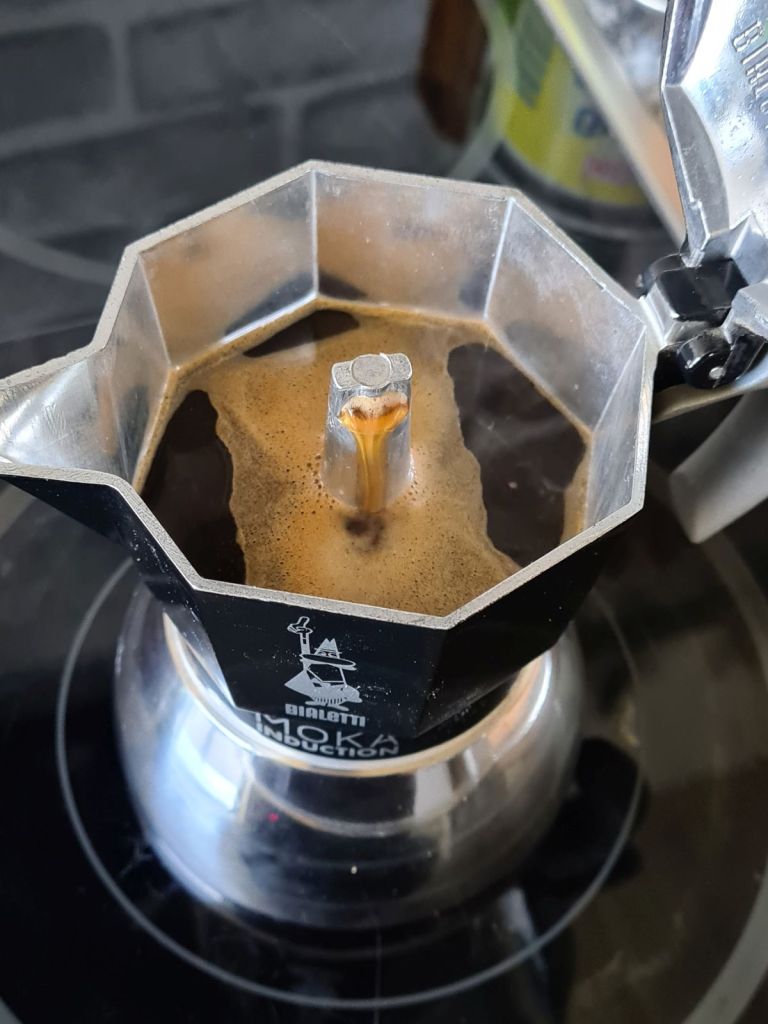
Step 3:
Screw the top part onto the bottom part and place it on a heat source of your choice.
The heat should be moderate.
Open the lid so you can see what’s going on. As soon as the water in the bottom part boils, the coffee starts pouring into the top part. When that happens, take the pot away from the heat and let it finish doing its thing.


Step 4: pour your moka into small cups, add a cookie and enjoy!
Step 5: clean-up
- take your moka pot apart and discard the coffee grounds
- use just water and a soft cloth to clean your moka pot. no soap, no scratchy scrubbies!
- dry everything off with a kitchen towel. I leave my pots apart and only put them back together when I want to use them. That way there’s no trapped moisture anywhere.
- over time, a little bit of patina will build up on the inside of your pot, but that’s nothing to worry about. It’s like seasoning and just makes the coffee taste better.
 Sourdough and Heavy Metal
2 responses to “Perfect Moka”
That’s one method I haven’t tried. I’m usually Chemex or AeroPress
LikeLiked by 1 person
Coffee is the elixir of life. 🙂
LikeLiked by 1 person